





Twenty-eight quarter acres. Pick one.
Every patch on the grid is a real piece of this farm, in a named field, with a crop, a drilling date and a harvest window. You pay once, at a fixed price, and what you get back is produce — never money, never a share, never a return.
Read this before anything else
Plotting is a fixed-price forward purchase of produce, delivered in kind. It is not an investment, there is no cash return, no profit share, and no secondary market. We are emphatic about this because the alternative — paying people a cash share of a harvest they had no hand in managing — is an unauthorised collective investment scheme under section 235 of the Financial Services and Markets Act 2000, and a criminal offence.
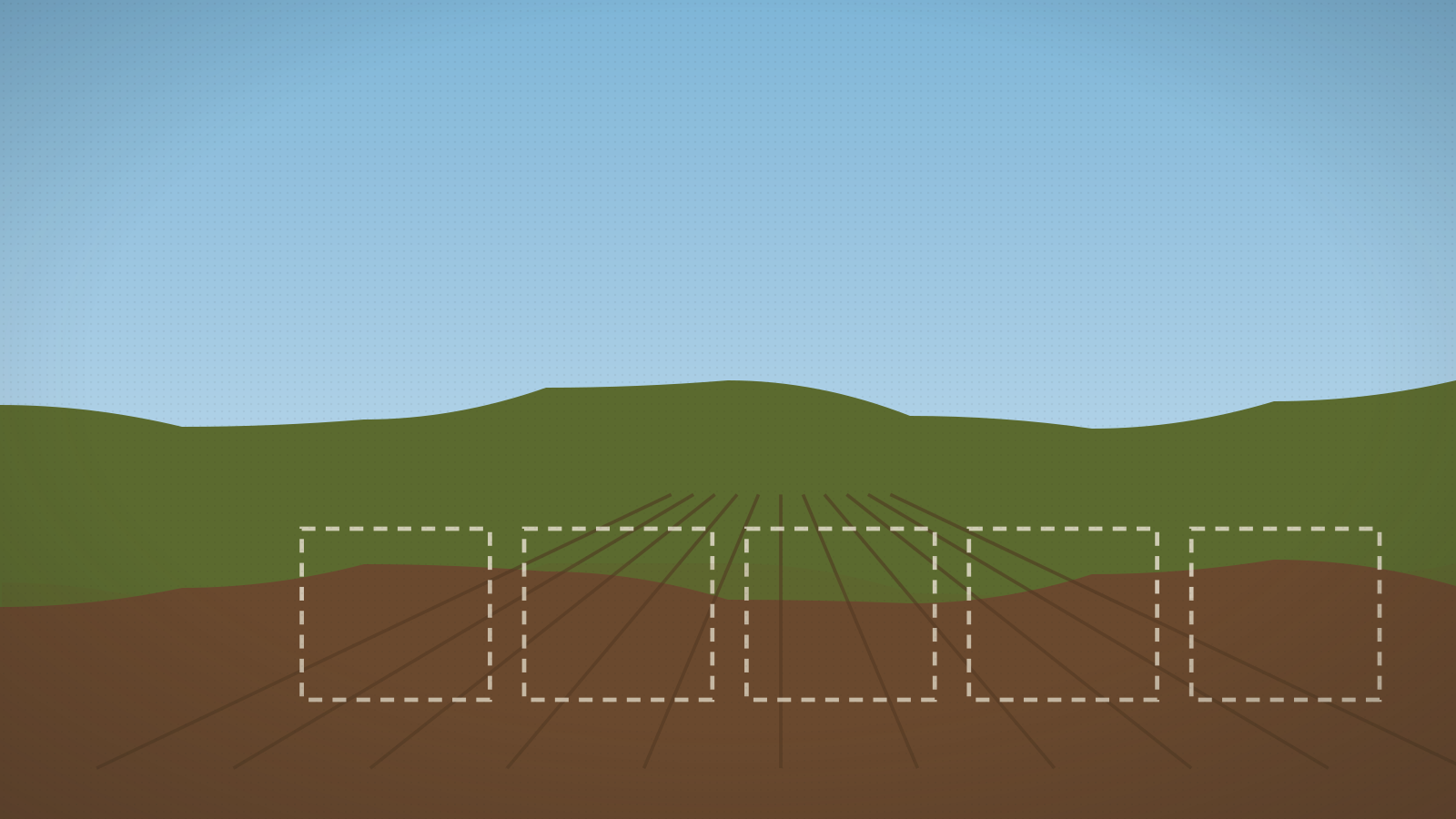
The grid, as it stands this morning.
Four rows, seven columns, seven fields. Crossed cells are gone for this season — a patch is released again only when the drilling plan for the next one is set, which is usually in the first week of September.
Free to take Taken this season One cell is a quarter of an acre, except the hedgerow patches, which are twenty metres of hedge, and the potato and market-garden beds, which are an eighth. The plan is schematic, and deliberately so.
A1 · Spring barley
The top corner of the block, drilled first and ripe first. Malting barley if the grain nitrogen comes in under 1.85 per cent, feed barley if it does not, and nobody knows which until it is tested.
- Size
- A quarter of an acre
- Drilled
- Mid-March
- Harvest window
- Late July into August
- You receive
- 48 bottles of Hawkstone lager
£180paid once, up front, fixed
Taken for this season. The waiting list opens when the next drilling plan is set.
Join the waiting listYou are buying a crop forward at a fixed price and receiving produce in kind. No cash return, no profit share, no resale market, and no interest in the land itself.
A2 · Spring barley
The middle of the block, and the most ordinary quarter acre on this farm. Nothing dramatic has ever happened here, which after 2025 counts as a selling point.
- Size
- A quarter of an acre
- Drilled
- Mid-March
- Harvest window
- Late July into August
- You receive
- 48 bottles of Hawkstone lager
£180paid once, up front, fixed
Take this patchYou are buying a crop forward at a fixed price and receiving produce in kind. No cash return, no profit share, no resale market, and no interest in the land itself.
A3 · Spring barley
Hard against the track, so it takes the dust off every trailer that leaves in August and the compaction from every one that turns. Five pounds off, honestly earned.
- Size
- A quarter of an acre
- Drilled
- Mid-March
- Harvest window
- Late July into August
- You receive
- 48 bottles of Hawkstone lager
£175paid once, up front, fixed
Taken for this season. The waiting list opens when the next drilling plan is set.
Join the waiting listYou are buying a crop forward at a fixed price and receiving produce in kind. No cash return, no profit share, no resale market, and no interest in the land itself.
A4 · Spring barley
Sitting over an old headland that was compacted long before any of us got here. It runs about eight per cent under the rest of the block and the price says so.
- Size
- A quarter of an acre
- Drilled
- Mid-March
- Harvest window
- Late July into August
- You receive
- 44 bottles of Hawkstone lager
£170paid once, up front, fixed
Take this patchYou are buying a crop forward at a fixed price and receiving produce in kind. No cash return, no profit share, no resale market, and no interest in the land itself.
A5 · Winter barley
Winter barley, which nobody photographs and everybody needs: it comes off in mid-July and gives the rape somewhere to be drilled in August.
- Size
- A quarter of an acre
- Drilled
- Late September
- Harvest window
- Mid-July — the first combine of the year
- You receive
- 44 bottles of Hawkstone lager
£165paid once, up front, fixed
Take this patchYou are buying a crop forward at a fixed price and receiving produce in kind. No cash return, no profit share, no resale market, and no interest in the land itself.
A6 · Winter barley
The same crop, the same fortnight, one field boundary further west. If you want to watch a combine before anybody else on this platform does, this is the patch.
- Size
- A quarter of an acre
- Drilled
- Late September
- Harvest window
- Mid-July — the first combine of the year
- You receive
- 44 bottles of Hawkstone lager
£165paid once, up front, fixed
Taken for this season. The waiting list opens when the next drilling plan is set.
Join the waiting listYou are buying a crop forward at a fixed price and receiving produce in kind. No cash return, no profit share, no resale market, and no interest in the land itself.
A7 · Spring barley
The bottom of the block, where the brash gives way to something with a bit of body in it and the ears fill for about two days longer. The best barley patch here.
- Size
- A quarter of an acre
- Drilled
- Mid-March
- Harvest window
- Late July into August
- You receive
- 52 bottles of Hawkstone lager
£185paid once, up front, fixed
Take this patchYou are buying a crop forward at a fixed price and receiving produce in kind. No cash return, no profit share, no resale market, and no interest in the land itself.
B1 · Winter wheat
Drilled a fortnight later than the textbook says, because every day of delay in October is one fewer blackgrass plant in May. It costs yield. It costs less than the blackgrass does.
- Size
- A quarter of an acre
- Drilled
- Mid-October, deliberately late
- Harvest window
- Late August
- You receive
- 25kg of flour, milled and sent in three lots
£220paid once, up front, fixed
Take this patchYou are buying a crop forward at a fixed price and receiving produce in kind. No cash return, no profit share, no resale market, and no interest in the land itself.
B2 · Winter wheat
Mid-slope on the best ground this farm has, which is the only place here where the agronomy plan and the harvest ticket ever agree with one another.
- Size
- A quarter of an acre
- Drilled
- Mid-October, deliberately late
- Harvest window
- Late August
- You receive
- 25kg of flour, milled and sent in three lots
£220paid once, up front, fixed
Taken for this season. The waiting list opens when the next drilling plan is set.
Join the waiting listYou are buying a crop forward at a fixed price and receiving produce in kind. No cash return, no profit share, no resale market, and no interest in the land itself.
B3 · Winter wheat
The shaded end, under the ash line, which loses about an hour of sun a day in June and fills the grain accordingly.
- Size
- A quarter of an acre
- Drilled
- Mid-October, deliberately late
- Harvest window
- Late August
- You receive
- 25kg of flour, milled and sent in three lots
£215paid once, up front, fixed
Take this patchYou are buying a crop forward at a fixed price and receiving produce in kind. No cash return, no profit share, no resale market, and no interest in the land itself.
B4 · Durum wheat
The crop that failed hardest in 2025 — under two tonnes a hectare against an expected six. It is here because it makes pasta and because we would rather show you the risky one than hide it.
- Size
- A quarter of an acre
- Drilled
- Late March
- Harvest window
- Late August, if at all
- You receive
- 10kg of pasta, made from your own durum
£240paid once, up front, fixed
Taken for this season. The waiting list opens when the next drilling plan is set.
Join the waiting listYou are buying a crop forward at a fixed price and receiving produce in kind. No cash return, no profit share, no resale market, and no interest in the land itself.
B5 · Durum wheat
Durum needs a dry, hot ripening period and a British summer is a coin toss. The shared-risk substitution on this patch is not a formality — read it before you take it.
- Size
- A quarter of an acre
- Drilled
- Late March
- Harvest window
- Late August, if at all
- You receive
- 10kg of pasta, made from your own durum
£240paid once, up front, fixed
Take this patchYou are buying a crop forward at a fixed price and receiving produce in kind. No cash return, no profit share, no resale market, and no interest in the land itself.
B6 · Winter oats
Oats ask for less nitrogen, less fungicide and less argument than wheat, and are the crop most likely to be here in ten years. Also the cheapest breakfast on this page.
- Size
- A quarter of an acre
- Drilled
- Early October
- Harvest window
- Early August
- You receive
- 8kg of rolled oats and a box of oatcakes
£150paid once, up front, fixed
Take this patchYou are buying a crop forward at a fixed price and receiving produce in kind. No cash return, no profit share, no resale market, and no interest in the land itself.
B7 · Winter wheat
The very top of the hill, where the soil thins to brash again and the yield map goes pale every year in exactly the same shape.
- Size
- A quarter of an acre
- Drilled
- Mid-October, deliberately late
- Harvest window
- Late August
- You receive
- 25kg of flour, milled and sent in three lots
£210paid once, up front, fixed
Take this patchYou are buying a crop forward at a fixed price and receiving produce in kind. No cash return, no profit share, no resale market, and no interest in the land itself.
C1 · Potatoes
The crop that started the shop. Forty tonnes of accidental potatoes needed a buyer in 2020 and a shed got a till. This is an eighth of an acre of the same idea.
- Size
- An eighth of an acre
- Drilled
- Planted in April
- Harvest window
- Lifted late September into October
- You receive
- Three 12kg sacks, sent within a week of lifting
£120paid once, up front, fixed
Taken for this season. The waiting list opens when the next drilling plan is set.
Join the waiting listYou are buying a crop forward at a fixed price and receiving produce in kind. No cash return, no profit share, no resale market, and no interest in the land itself.
C2 · Potatoes
Valley ground, which holds water in a dry June and holds too much of it in a wet October. The most reliable thing on this grid and the least glamorous.
- Size
- An eighth of an acre
- Drilled
- Planted in April
- Harvest window
- Lifted late September into October
- You receive
- Three 12kg sacks, sent within a week of lifting
£120paid once, up front, fixed
Take this patchYou are buying a crop forward at a fixed price and receiving produce in kind. No cash return, no profit share, no resale market, and no interest in the land itself.
C3 · Oilseed rape
The yellow everybody photographs in May and a genuine gamble every year since the neonicotinoid ban. Cabbage stem flea beetle decides this one, not us.
- Size
- A quarter of an acre
- Drilled
- Mid-August
- Harvest window
- Late July
- You receive
- Six 500ml bottles of cold-pressed rapeseed oil
£160paid once, up front, fixed
Take this patchYou are buying a crop forward at a fixed price and receiving produce in kind. No cash return, no profit share, no resale market, and no interest in the land itself.
C4 · Oilseed rape
Drilled straight behind the winter barley, into moisture if there is any, and written off by the end of September about one year in three.
- Size
- A quarter of an acre
- Drilled
- Mid-August
- Harvest window
- Late July
- You receive
- Six 500ml bottles of cold-pressed rapeseed oil
£160paid once, up front, fixed
Taken for this season. The waiting list opens when the next drilling plan is set.
Join the waiting listYou are buying a crop forward at a fixed price and receiving produce in kind. No cash return, no profit share, no resale market, and no interest in the land itself.
C5 · Spring oats
Spring cropping in the corner named after the weed, because a March drilling kills more blackgrass than any chemistry left on the label.
- Size
- A quarter of an acre
- Drilled
- Late March
- Harvest window
- Early September
- You receive
- 8kg of rolled oats and a box of oatcakes
£150paid once, up front, fixed
Take this patchYou are buying a crop forward at a fixed price and receiving produce in kind. No cash return, no profit share, no resale market, and no interest in the land itself.
C6 · Spring barley
Heavier ground than the block, so it goes in a fortnight later and comes off a week later. In a dry year it is the best barley here; in a wet spring it is a swamp.
- Size
- A quarter of an acre
- Drilled
- Late March
- Harvest window
- Early August
- You receive
- 44 bottles of Hawkstone lager
£175paid once, up front, fixed
Take this patchYou are buying a crop forward at a fixed price and receiving produce in kind. No cash return, no profit share, no resale market, and no interest in the land itself.
C7 · Winter wheat
Where the drainage work went in, and the one place on this farm where a drainage scheme has genuinely paid for itself rather than merely felt productive.
- Size
- A quarter of an acre
- Drilled
- Early October
- Harvest window
- Late August
- You receive
- 25kg of flour, milled and sent in three lots
£205paid once, up front, fixed
Take this patchYou are buying a crop forward at a fixed price and receiving produce in kind. No cash return, no profit share, no resale market, and no interest in the land itself.
D1 · Hedgerow
Not a crop. Twenty metres of hedge, laid properly by hand rather than flailed, which is slower, dearer and the reason there are still yellowhammers in it.
- Size
- Twenty metres of hedge
- Drilled
- Laid between December and February
- Harvest window
- Blackberries picked late August
- You receive
- Four jars of blackberry jam and the year’s photographs
£90paid once, up front, fixed
Taken for this season. The waiting list opens when the next drilling plan is set.
Join the waiting listYou are buying a crop forward at a fixed price and receiving produce in kind. No cash return, no profit share, no resale market, and no interest in the land itself.
D2 · Hedgerow
The stretch along the bridleway, so this is the hedge most people who walk here actually see. Laid in the Midland bullock style, badly, by people learning.
- Size
- Twenty metres of hedge
- Drilled
- Laid between December and February
- Harvest window
- Blackberries picked late August
- You receive
- Four jars of blackberry jam and the year’s photographs
£90paid once, up front, fixed
Take this patchYou are buying a crop forward at a fixed price and receiving produce in kind. No cash return, no profit share, no resale market, and no interest in the land itself.
D3 · Hedgerow
Gap-planted in 2024 with hawthorn, blackthorn, field maple, hazel, dogwood and holly. Six species in twenty metres, which is the number the counts actually reward.
- Size
- Twenty metres of hedge
- Drilled
- Laid between December and February
- Harvest window
- Blackberries picked late August
- You receive
- Four jars of blackberry jam and the year’s photographs
£90paid once, up front, fixed
Take this patchYou are buying a crop forward at a fixed price and receiving produce in kind. No cash return, no profit share, no resale market, and no interest in the land itself.
D4 · Wildflower margin
Ground taken out of production on purpose. It produces nothing you can eat and is, on the accounts, one of the better-returning parcels on this farm.
- Size
- A quarter of an acre
- Drilled
- Sown in April
- Harvest window
- No harvest, deliberately
- You receive
- Two jars of honey from the hives beside it, and the counts
£140paid once, up front, fixed
Take this patchYou are buying a crop forward at a fixed price and receiving produce in kind. No cash return, no profit share, no resale market, and no interest in the land itself.
D5 · Wildflower margin
The strip beside the hives. You get the honey, the pollinator transect counts and a photograph in the second week of every month, which is the whole product.
- Size
- A quarter of an acre
- Drilled
- Sown in April
- Harvest window
- No harvest, deliberately
- You receive
- Two jars of honey from the hives beside it, and the counts
£140paid once, up front, fixed
Taken for this season. The waiting list opens when the next drilling plan is set.
Join the waiting listYou are buying a crop forward at a fixed price and receiving produce in kind. No cash return, no profit share, no resale market, and no interest in the land itself.
D6 · Market garden bed
The only intensive growing that makes any sense on this farm, because value per square metre is the only number that survives the labour it takes.
- Size
- An eighth of an acre
- Drilled
- Succession-sown from March
- Harvest window
- Picked May to October
- You receive
- A vegetable box a fortnight through the season
£160paid once, up front, fixed
Take this patchYou are buying a crop forward at a fixed price and receiving produce in kind. No cash return, no profit share, no resale market, and no interest in the land itself.
D7 · Echium
Fifteen centimetres of stony soil over limestone, growing a borage relative for its oil because nothing conventional pays up here. The most experimental patch on the grid.
- Size
- A quarter of an acre
- Drilled
- Drilled in April
- Harvest window
- Harvested in August
- You receive
- Two 100ml bottles of cold-pressed echium oil
£190paid once, up front, fixed
Take this patchYou are buying a crop forward at a fixed price and receiving produce in kind. No cash return, no profit share, no resale market, and no interest in the land itself.
What you are actually buying, in one paragraph.
A stated quantity of produce, at a fixed price, delivered in kind, with your name attached to a numbered piece of ground so you can watch the thing you have bought being grown.
What you are not buying is the tonnage off that quarter acre. A quarter acre of spring barley yields considerably more than forty-eight bottles of lager, and the rest of it goes into the same lorry as everything else on this farm. Your allocation is a fixed quantity set at purchase, not a share of the harvest — because the moment it becomes a share of the harvest, your return depends on the crop and the whole arrangement slides into territory that requires an FCA authorisation nobody here has.
It is a less exciting product than the one the marketing department wanted. It is also the only one that is legal, and we would rather explain the difference than be prosecuted for it.
The specification, in full.
What a patch is
- Size
- A quarter of an acre, or a stated eighth, or twenty metres of hedge
- Term
- One season, from drilling to delivery
- Price
- Between £90 and £240, fixed at purchase and never varied
- You receive
- A stated quantity of produce, in kind
- Cash return
- None. Not now, not ever, not under any circumstances
- Resale
- None. There is no secondary market and we will not build one
What happens on the ground
- Farmed by
- Kaleb Cooper’s team, with everything else, as one operation
- Your access
- Cameras, photographs, growth stages and the annual open day
- Physical access
- None unaccompanied. It is a working farm with machinery in it
- Management control
- The farm’s, entirely, at all times
- If it fails
- Substitution or partial refund, chosen by you at purchase
The legal shape
- Contract type
- Forward sale of goods
- Not
- A lease, a tenancy, a security, a CIS, an AIF or a share
- Governing statute
- Consumer Rights Act 2015, as a sale of goods
- Deliberately outside
- FSMA 2000 s.235, and Street v Mountford
- Money held
- Ring-fenced until the produce is delivered
Every figure here is a term of the sale rather than a projection. There are no yield promises on this page because a yield promise is the first step towards a return.
What happens to your patch, and when we tell you.
These are the real growth stages of a winter wheat crop, with the Zadoks codes an agronomist would actually use. Every one of them fires a notification, and none of them is decorative.
-
Between 5 and 20 October
Drilling
Seed goes in at around 350 seeds per square metre, three centimetres deep, a fortnight later than the textbook says. Every day of delay in October is one fewer blackgrass plant in May.
The drill date, the seed rate, the variety and the field, logged the same evening.
-
Twelve to twenty days later, late October
Emergence — GS09
The coleoptile breaks the surface and the rows become visible from the gate. This is the first point at which anything can be judged, and the first point at which slugs matter.
A photograph from the same fence post we will use all year, so the sequence lines up.
-
November to February
Tillering — GS21 to GS29
The plant puts out side shoots. Every tiller is a potential ear, and the number it makes over winter sets the ceiling on everything that follows.
A tiller count per square metre in early February, and what it implies for the ceiling.
-
Late March into April
Stem extension — GS30 to GS32
The first node becomes detectable at the base of the stem and the growing point lifts above ground, where frost can finally reach it. The plant stops making tillers and starts losing them.
The date GS31 was reached, because every input decision after this hangs off it.
-
Early MayNow
Flag leaf — GS39
The last leaf emerges. It does something close to forty-five per cent of the work of filling the grain, which is why it gets the most expensive fungicide of the year.
The flag leaf date, the septoria pressure, and what was sprayed on it.
-
Mid to late May
Ear emergence — GS51 to GS59
The ear pushes out of the boot. Flowering follows within days, and a hot dry week here costs grains per ear that no amount of later sunshine puts back.
The ear count per square metre — the number that predicts the yield better than anything else.
-
June into mid-July
Grain fill — GS71 to GS77
Watery ripe to soft dough. The grain lays down starch, and the crop is now living almost entirely on what the flag leaf and the ear can photosynthesise.
A thousand-grain weight estimate, and the first honest yield guess of the year.
-
Mid to late July
Ripening — GS87 to GS92
Hard dough to caryopsis hard. The green goes out of the straw, moisture falls, and the whole farm starts watching a forecast it cannot influence.
Grain moisture readings, twice a week, published whether they are good or not.
-
Any dry window in August
Harvest
The combine goes in when the grain is under fifteen per cent moisture and the forecast holds for two days. In 2025 that window barely opened, and the durum came in under two tonnes a hectare against an expected six.
The cut date, the yield in tonnes per hectare, and the moisture at the header.
-
Within a day of cutting
In the shed
Weighed over the weighbridge, dried if it needs it, stored at 14.5 per cent moisture and sampled for nitrogen — which decides whether barley is malting or merely feed.
The weighbridge ticket number, the sample result, and the date your allocation was set aside.
Dates are the honest windows for this farm at this latitude, not fixed appointments. The crop decides, and the crop has never once consulted a calendar.
Everything that has happened to patch B2.
One patch, one season, every event logged as it happened. Each line carries a hash of itself and of the line above it, so an edit further up the chain stops the ones below it matching.
RecordDSE-PATCH-B2-2026
-
12 Oct 2025 · 08:14
Patch allocatedB2, Curdle Hill — winter wheat, quarter acre. Fixed price £220.
Platform
7c41f0a92e6b -
14 Oct 2025 · 16:40
DrilledVariety Extase at 352 seeds/m², 3cm, 4.1ha pass including this patch.
K. Cooper
a0d3b81547cf -
29 Oct 2025 · 09:02
Emergence recordedGS09. Establishment counted at 289 plants/m². Slug pellets not required.
C. Ireland
38ee2c740b19 -
06 Feb 2026 · 11:27
Tiller count742 tillers/m². Above the five-year mean for this field by about six per cent.
C. Ireland
b16a9f03d5e2 -
02 Apr 2026 · 07:55
GS31 reachedFirst node detectable. Plant growth regulator and first fungicide applied same day.
K. Cooper
4f72c0e8a361 -
08 May 2026 · 14:03
Flag leaf outGS39. T2 fungicide applied. Septoria pressure moderate after a wet April.
K. Cooper
d95b170ce4af -
21 May 2026 · 10:18
Ear count498 ears/m². The first number all year that predicts anything.
C. Ireland
2c8340f7b6da -
17 Jul 2026 · 06:30
Moisture reading18.4 per cent. Too wet to cut. Forecast reviewed daily from here.
Platform
6ba1e29d0374 -
09 Aug 2026 · 15:12
Harvested8.1 t/ha at 14.9 per cent moisture. Weighbridge ticket 20261194.
K. Cooper
e470c81af5b3 -
11 Aug 2026 · 09:44
Allocation set aside25kg milled to wholemeal, bagged in three lots, held for dispatch.
Platform
01fd6b3e829c
There is no blockchain here, no token and nothing minted. A hash chain in an ordinary database does exactly the same job for a fraction of the electricity and none of the vocabulary.
What the twenty-eight cost, and why.
| Crop | Size | Price | You receive | Why the price is what it is |
|---|---|---|---|---|
| Hedgerow | Twenty metres | £90 | Four jars of jam and the photographs | Laying costs labour, not inputs. Cheapest thing here. |
| Potatoes | An eighth of an acre | £120 | Three 12kg sacks | Bulky, reliable, and expensive to post. |
| Wildflower | A quarter acre | £140 | Two jars of honey and the counts | No crop, so you are paying for the ground being idle. |
| Oats | A quarter acre | £150 | 8kg of oats and oatcakes | Low input, low value, low drama. |
| Oilseed rape | A quarter acre | £160 | Six bottles of cold-pressed oil | Pressing costs more than growing it does. |
| Market garden | An eighth of an acre | £160 | A box a fortnight, May to October | Almost entirely labour. |
| Barley | A quarter acre | £165–£185 | 44 to 52 bottles of lager | Malting, brewing, bottling and duty. |
| Echium | A quarter acre | £190 | Two 100ml bottles of oil | Tiny yield, specialist pressing, thin soil. |
| Wheat | A quarter acre | £205–£220 | 25kg of flour | Milling and three separate postings. |
| Durum | A quarter acre | £240 | 10kg of pasta | The highest failure risk on the farm, priced accordingly. |
What a patch is, and what it will never be.
What you get
- A named, numbered quarter acre in a named field
- A fixed price, paid once, never varied
- A stated quantity of produce, delivered in kind
- Photographs from the same fence post all year
- Growth-stage notifications at ten real agronomic stages
- The shared-risk policy, agreed before you pay
What you never get
- Any cash return, profit share or dividend
- Any share of the tonnage that comes off the ground
- Any resale, transfer for value or secondary market
- Any exclusive possession of the land
- Any right to walk on it unaccompanied
- Any promise about yield, price or return
The questions the grid gets.
Five questions, asked in roughly this order, by nearly everybody.
On the open day, accompanied, and at no other time. It is a working farm with a combine in it and our insurer is unmoved by sentiment.
Existing patch-holders get first refusal for two weeks before the grid reopens. After that it is first come, and we do not run an auction for them.
Because a transferable claim with a price attached is a tradeable instrument, and building a market in one is exactly how a farm shop product turns into a regulated activity.
Per season. There is no rolling charge, nothing renews automatically, and if you do nothing at the end of the season nothing happens.
The shared-risk policy triggers and you take substitution or a partial refund, whichever you chose at purchase. In 2025 it triggered on the durum and on most of the barley.
Follow it from the drill to the door.
Ten growth stages, ten notifications, and the honest numbers at the end of them.