


Six pieces of ground.
Four of them grow something you can eat or drink. Two of them grow nothing at all, deliberately, and are among the most interesting things on the farm.
What is available.

A Quarter Acre of Barley
A quarter acre of spring barley, drilled in March and harvested in late July if the weather behaves. What comes…

A Wheat Run
A run of winter wheat, drilled deliberately late in September to give the blackgrass less of a chance. Comes back…
A Potato Bed
The crop that started the whole shop. A bed of potatoes, lifted in the autumn, delivered as potatoes — which…

A Strip of Oilseed Rape
The yellow crop everybody photographs in May, and a genuine gamble every year since the neonicotinoid ban. If the flea…
Twenty Metres of Hedgerow
Not a crop at all. Twenty metres of hedgerow, laid and maintained properly, which produces blackberries, habitat and agri-environment income.…
A Wildflower Plot
A plot taken deliberately out of production and sown with wildflowers. It produces nothing you can eat, which is exactly…
The six, compared.
| Plot | Price | You receive | Risk |
|---|---|---|---|
| A Quarter Acre of Barley | £180.00 | ≈48 bottles of Hawkstone | Moderate |
| A Wheat Run | £220.00 | Flour, milled from your run | High |
| A Potato Bed | £120.00 | Potatoes. Actual potatoes. | Moderate |
| A Strip of Oilseed Rape | £160.00 | Cold-pressed rapeseed oil | Moderate |
| Twenty Metres of Hedgerow | £90.00 | Blackberry jam, and photographs | Moderate |
| A Wildflower Plot | £140.00 | Honey from the hives beside it, and the photographs | Moderate |
Not an investment
Plotting is a fixed-price forward purchase of produce, delivered in kind. It is not an investment, there is no cash return, no profit share, and no secondary market. We are emphatic about this because the alternative — paying people a cash share of a harvest they had no hand in managing — is an unauthorised collective investment scheme under section 235 of the Financial Services and Markets Act 2000, and a criminal offence.
Why six, and why two of them grow nothing.
The four productive plots are the four things this ground actually grows at scale: barley for the brewery, wheat for flour, potatoes because of what happened in 2020, and oilseed rape because it is the break crop the rotation needs.
The hedgerow and the wildflower plot are here because the honest finding of the last six years is that the worst ground on this farm earns more out of production than in it. Selling only the productive four would be a tidier catalogue and a less truthful one.
What every plot has in common.
One season
From drilling to delivery. Nothing renews itself.
Delivered in kind
Beer, flour, potatoes, oil, jam or honey.
No cash return
Not now, not ever, under any circumstances.
Shared risk
Agreed before you pay, not discovered in August.
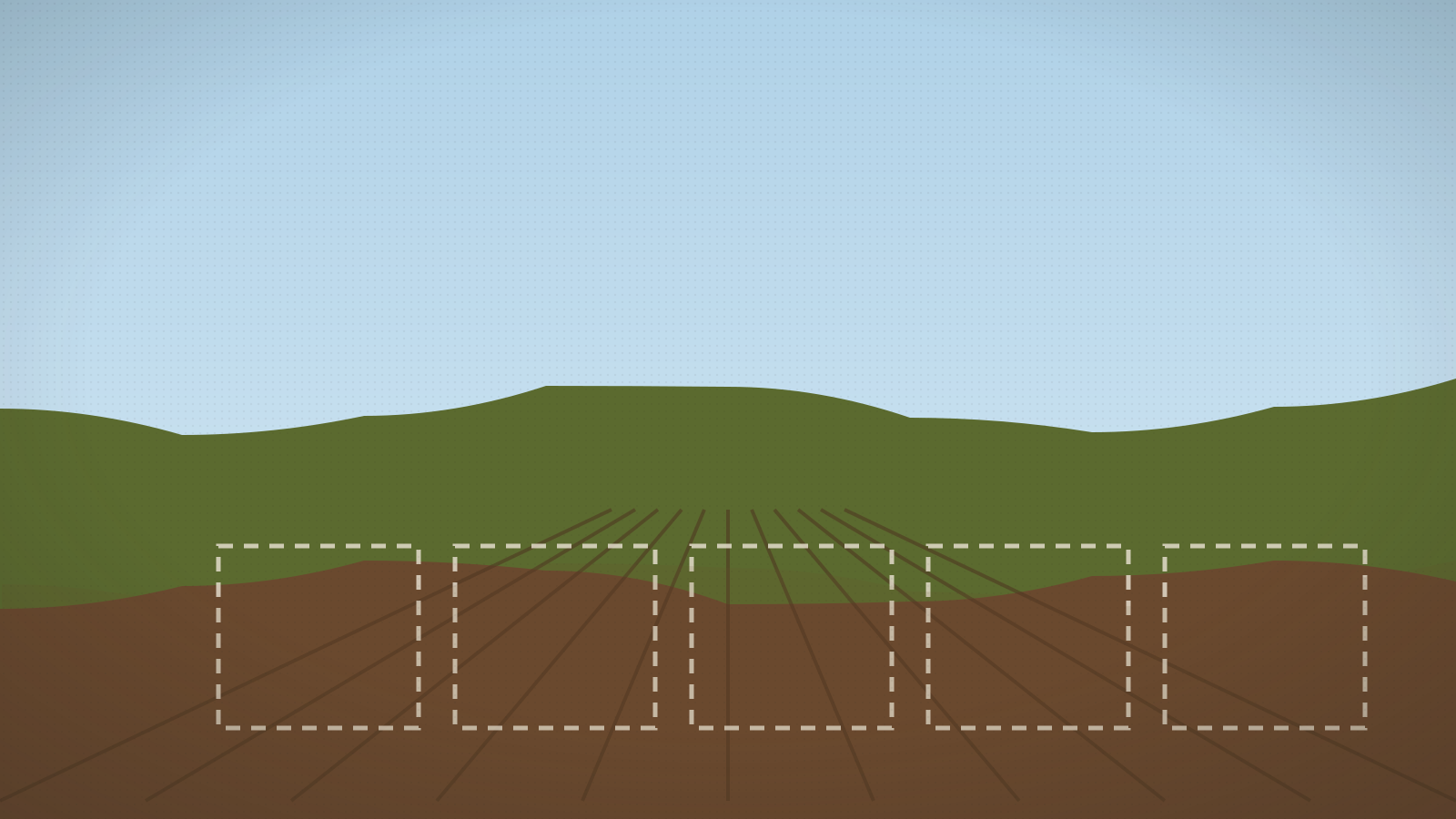
Or pick a numbered patch instead.
Twenty-eight quarter acres on a grid, in seven named fields.
What people actually ask.
The two questions this page gets most, answered without a support ticket.
At harvest, which is when harvest happens rather than when a calendar says it should. We tell you the window and then we tell you the date.
No, and the distinction is deliberate. You buy a crop forward at a fixed price and receive produce in kind. There is no cash return, no profit share and no resale market, because that would be an unauthorised collective investment scheme.