


The Woods.
A few acres of mixed woodland at the edge of the holding. It produces mushrooms, wild garlic, firewood and, at the moment, a serious quantity of dead ash.
- At
- 1.6 miles
- Produces
- Mushrooms, garlic, firewood
- Problem
- Ash dieback
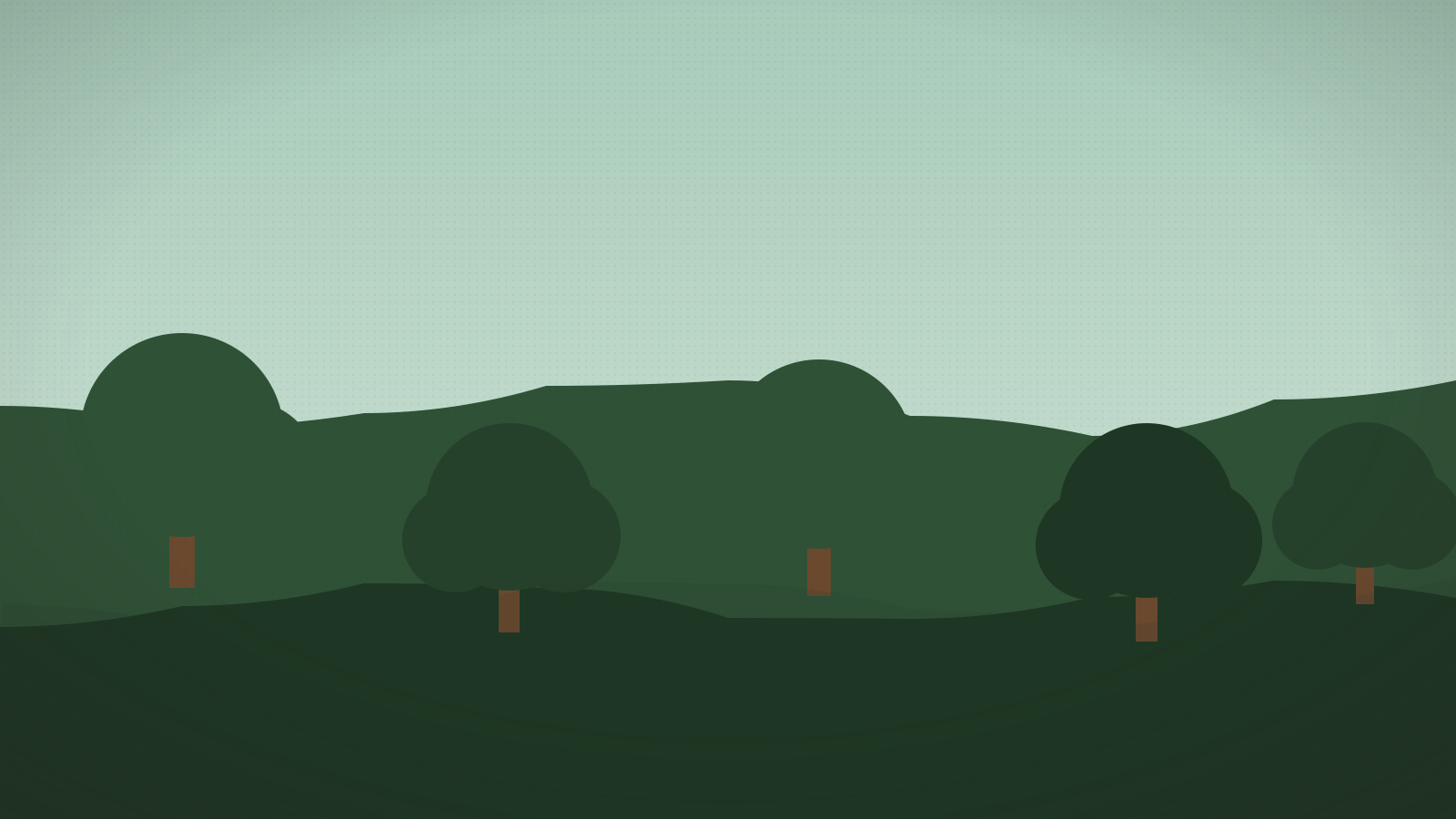
What is here.
Ash dieback has been through this wood as it has been through most of southern England. The standing dead have to come down where they are near a track or a boundary, because a dead ash does not fail gracefully — it drops limbs without warning and then the whole tree goes at once.
What is left is oak, field maple, hazel and a great deal of light on a floor that has not seen much for thirty years. Some of that is a loss and some of it is an opportunity, and it is too early to say which is winning.
Mushrooms come out of here, and wild garlic, and both end up in a crisp packet. Chapter 22 was called Mushrooming and Ocado reported searches for lion’s mane up 482 per cent week-on-week after it aired.
What happened here.
The woodland was, under conventional arable accounting, dead ground: it grows nothing you can combine and costs money to keep safe. Under the current arithmetic it produces a crisp, a scheme payment and firewood.
That inversion — the unproductive parts of a farm out-earning the productive ones — is the single most important thing British agriculture has learned in a decade, and almost nobody outside the industry knows it.
- At
- 1.6 miles
- Produces
- Mushrooms, garlic, firewood
- Problem
- Ash dieback
What it costs to keep.
The Woods
- Felling a dead ash near a track
- £300 to £900 a treeDepending on how awkward it is.
- Ash lost here
- Most of themThe same as everywhere else in southern England.
- What it produces
- Mushrooms, wild garlic, firewoodAnd a scheme payment.
- Replanting
- Oak, hazel, field mapleOn a timescale nobody involved will see the end of.
Costs are indicative ranges for work of this kind in this part of the country, not invoices. Where a figure is a published estate number rather than a general one, it says so in the row.
What to look at, while you are here.
The standing dead
Ash, and there is no version of this story where they recover.
The floor
More light than it has had in thirty years, and it shows.
The mushrooms
Which become the Mushroom and Wild Garlic crisps.
The setts
On the bank at the far edge, and the subject of an entire chapter.
The Woods, in the season it looks best. It does not look like this in February, and the walk changes plates when the real season at OX7 does.
Further along.
The Dry Stone Wall
No mortar, no foundation to speak of, and it will outlive everybody involved in building it. Around a hundred and…
The Spring
A spring line where the limestone meets the clay, a stone trough, and the only reliable water on the holding…
The Unfarmed
Margins, hedges, woodland edge and the corners a combine cannot reach. Under conventional management this is waste ground. On the…
The Bees
Six hives on the south edge of the wildflower ground. They produce honey which is sold as Bee Juice at…
Watch this bit live instead.
There is a camera on or near this stop, running all year, with no audio and no zoom.