


The Dry Stone Wall.
No mortar, no foundation to speak of, and it will outlive everybody involved in building it. Around a hundred and fifty pounds a metre to rebuild properly, which is why so much of the Cotswolds is now post and wire.
- At
- 1.2 miles
- To rebuild
- £120–£180/m
- Rate
- About a metre a day
What is here.
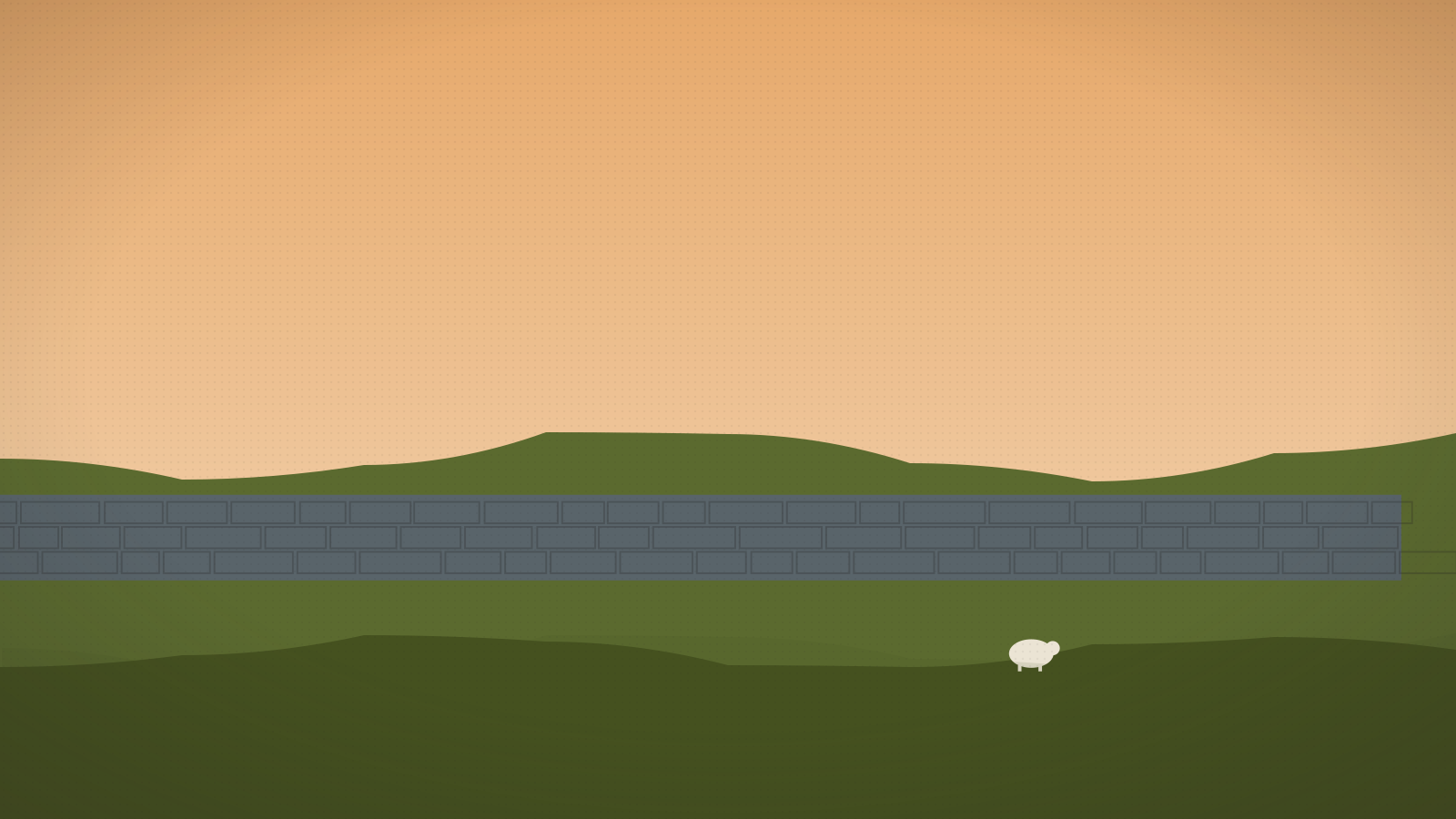
A dry stone wall is two skins of stone leaning inward on each other with a middle filled with smaller stone, and a row of copes on top holding the whole argument together. Nothing sticks it down. It stands because of friction and because somebody who knew what they were doing chose each stone.
Gerald Cooper is the person who knew what he was doing. He has been walling on this ground for longer than most of the people watching him have been alive, and the fact that he is largely unintelligible on television is beside the point entirely.
A wall like this takes a skilled waller about a metre a day to rebuild from collapsed stone. At a hundred and twenty to a hundred and eighty pounds a metre, a hundred-metre gap is a serious capital decision rather than a maintenance job.
What happened here.
Walls came down across the Cotswolds through the second half of the twentieth century and went back up as wire, because wire is cheap and quick and does the same job for a decade.
What wire does not do is hold habitat, take a scheme payment, or still be standing in 2140. Agri-environment schemes now pay towards restoring wall and hedge, which is the first time in seventy years the arithmetic has pointed back towards doing it properly.
- At
- 1.2 miles
- To rebuild
- £120–£180/m
- Rate
- About a metre a day
What it costs to keep.
The Dry Stone Wall
- Rebuilding, per metre
- £120 to £180Skilled labour, from collapsed stone.
- Rate of work
- About a metre a dayBy one experienced waller.
- Post and wire, per metre
- Under £10Which is exactly why the walls came down.
- Working life
- A century, or moreAgainst roughly a decade for wire.
Costs are indicative ranges for work of this kind in this part of the country, not invoices. Where a figure is a published estate number rather than a general one, it says so in the row.
What to look at, while you are here.
The copes
The stones stood on edge along the top. They are the structure, not the decoration.
The batter
The inward lean. It is what makes a pile of stone into a wall.
The gaps
Deliberate. They are habitat, and they are why a wall is worth more than a fence.
The work
One metre a day. Look at how long the wall is and do the arithmetic.
The Dry Stone Wall, in the season it looks best. It does not look like this in February, and the walk changes plates when the real season at OX7 does.
Further along.

The Big Field
From the top of the rise you can see the entire field at once, which means you can see the…
The Woods
A few acres of mixed woodland at the edge of the holding. It produces mushrooms, wild garlic, firewood and, at…

The Spring
A spring line where the limestone meets the clay, a stone trough, and the only reliable water on the holding…
The Unfarmed
Margins, hedges, woodland edge and the corners a combine cannot reach. Under conventional management this is waste ground. On the…
Watch this bit live instead.
There is a camera on or near this stop, running all year, with no audio and no zoom.