


The Big Field.
From the top of the rise you can see the entire field at once, which means you can see the thin ground fail before anybody standing in it notices. This is Cotswold brash doing what Cotswold brash does.
- At
- 0.8 miles
- Size
- About 180 acres
- Soil
- Brash, 15–45 cm
What is here.
Fifteen to forty-five centimetres of stony soil over limestone. It drains beautifully and holds almost no water, which is a wonderful quality in February and a catastrophic one in a dry April.
The field runs from about a hundred and eighty metres at the bottom to two hundred and thirty at the top. The tops go pale first in a dry June, then the mid-slope, and the bottoms hold on. You can see all three states in one frame, which is the single most useful thing about standing here.
This is the ground the whole argument about spring barley versus second wheat is had on. Spring barley wins, which is convenient, because spring barley is what the brewery wants.
What happened here.
In 2025 this field, and every field like it, lost the year. Wheat came in about thirty per cent down, barley about forty, and durum under two tonnes a hectare against an expected six. A planned thirty-seven thousand pound profit became a loss of roughly five thousand.
None of that is unusual. Agriculture alone made a net loss of £27,400 on the average English cereals farm in 2024–25. What is unusual is publishing it, which is why this stop has numbers on it rather than adjectives.
- At
- 0.8 miles
- Size
- About 180 acres
- Soil
- Brash, 15–45 cm
What it costs to keep.
The Big Field
- Establishing a hectare of cereals
- £450 to £700Seed, fertiliser, chemistry, diesel, labour.
- 2025 wheat
- About 30% downAgainst plan, on the published figures.
- 2025 barley
- About 40% downSame year, same reason: a dry spring.
- The year’s result
- A loss of about £5,000From a planned £37,000 profit.
Costs are indicative ranges for work of this kind in this part of the country, not invoices. Where a figure is a published estate number rather than a general one, it says so in the row.
What to look at, while you are here.
The tops
Pale first, every dry year, about a fortnight before anybody in the field notices.
The tramlines
Which tell you the drill width and therefore the whole system.
The bottoms
Greener, later, and the only part that holds on in June.
The pole
Six and a half metres, solar powered, and the reason there is a camera here at all.
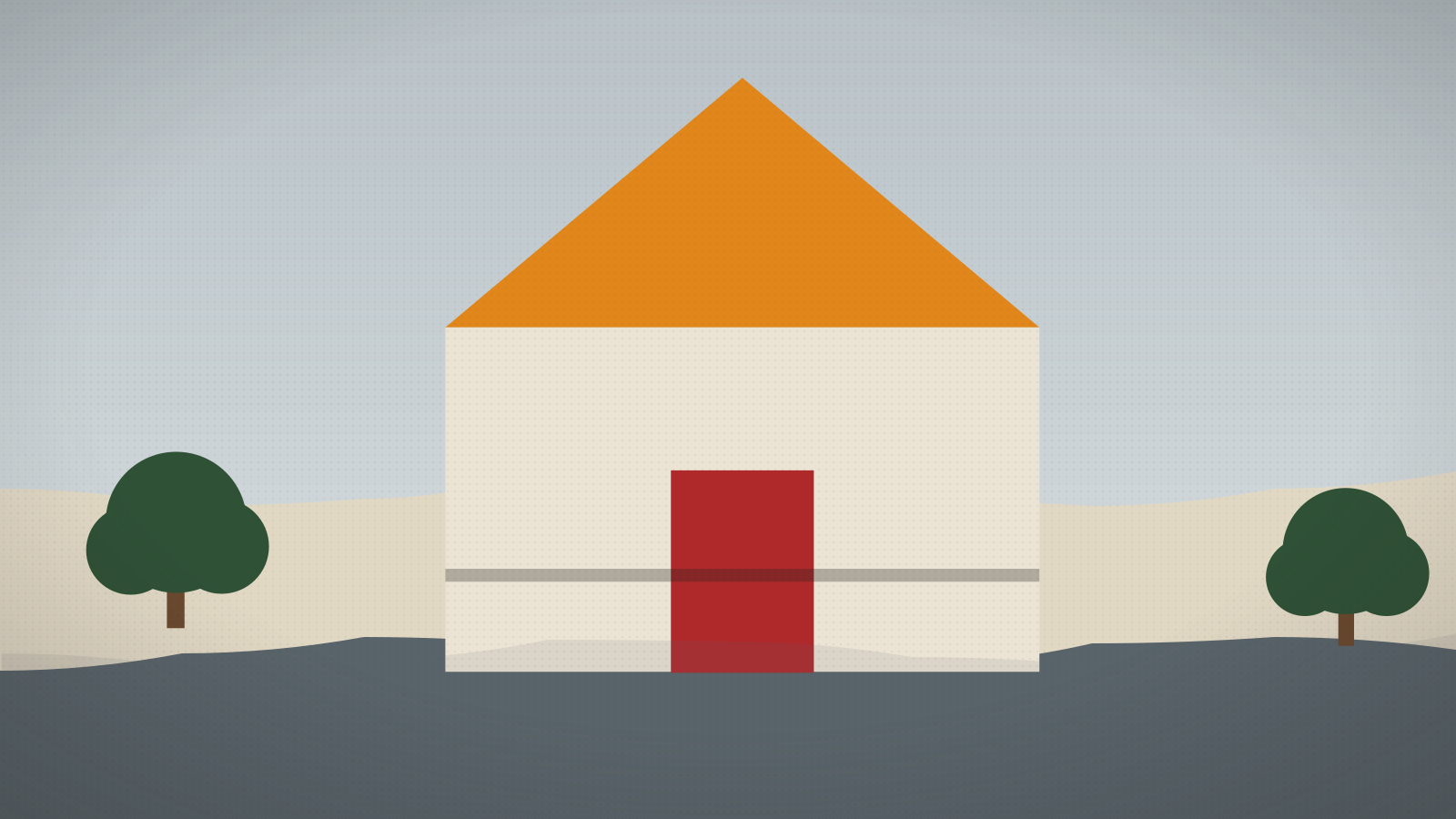
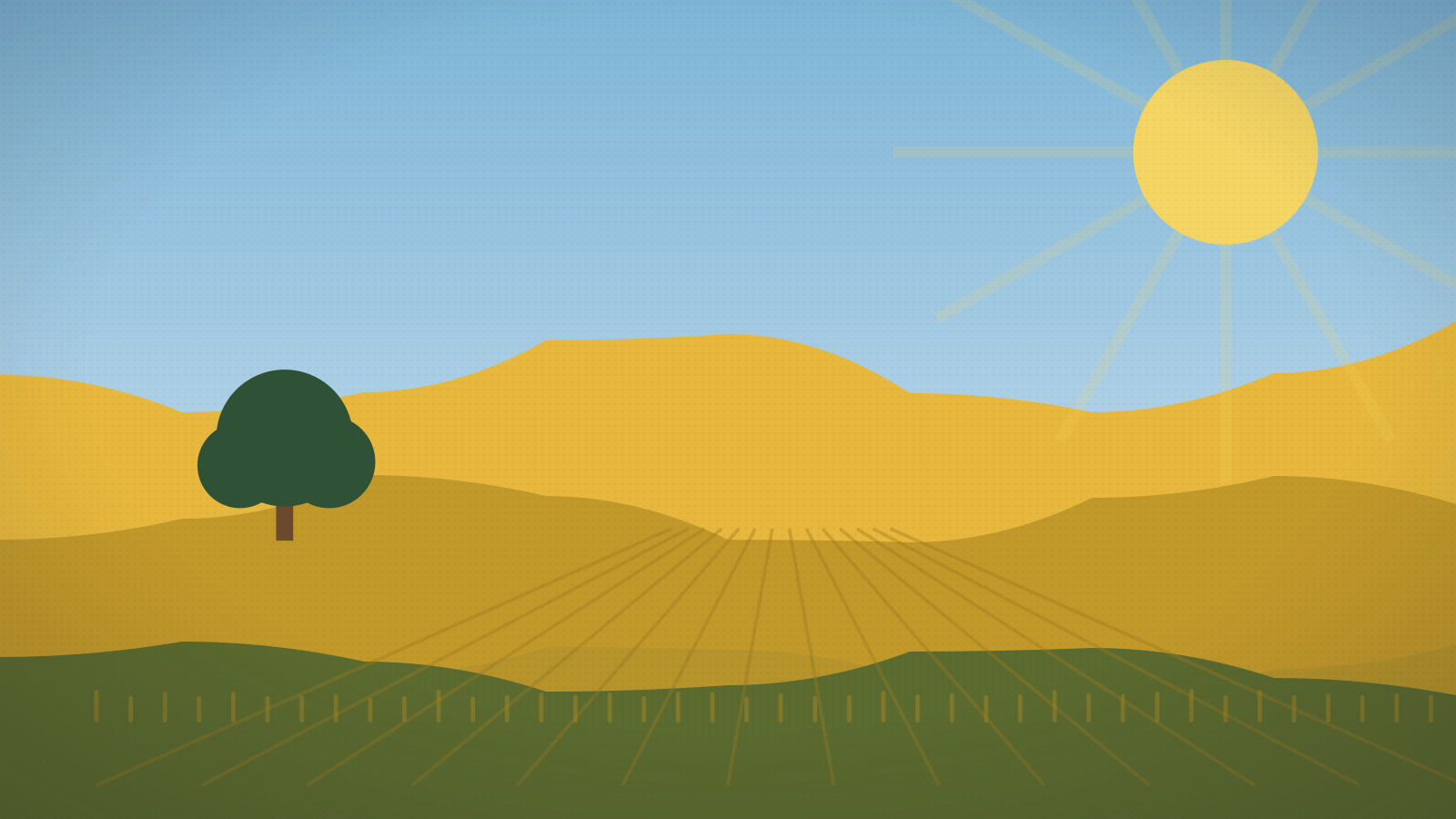
The Big Field, in the season it looks best. It does not look like this in February, and the walk changes plates when the real season at OX7 does.
Further along.
The Yard
The turning circle between the grain store, the workshop and the back of the shop. It is where the farm…
The Dry Stone Wall
No mortar, no foundation to speak of, and it will outlive everybody involved in building it. Around a hundred and…
The Woods
A few acres of mixed woodland at the edge of the holding. It produces mushrooms, wild garlic, firewood and, at…
The Spring
A spring line where the limestone meets the clay, a stone trough, and the only reliable water on the holding…
Watch this bit live instead.
There is a camera on or near this stop, running all year, with no audio and no zoom.