








You saw that field go in. This is that field.
When a chapter shows a drill going across a named piece of ground, that ground has a number on this grid, and for the fortnight after the chapter lands you can buy a claim on what comes off it. Not a lookalike, not a themed bundle. The actual field, with the broadcast date in the provenance record.
The one thing broadcast can do that retail cannot.
A farm shop competes on provenance with every other farm shop in Britain, and provenance is a claim that consumers have learned to discount because it is made by everybody.
What is not available to anybody else is nine million people having watched the drilling. When the field, the date, the operator and the weather are already established in the viewer’s head, the forward sale stops being a leap of faith and becomes a continuation of something they already saw.
That is a genuine structural advantage and it is worth about a fortnight. After that the chapter recedes, the patches sell at the ordinary price, and the whole thing goes back to being flour.
How a broadcast patch runs.
Fourteen days, and no artificial extension of it.
Eight chapters drop in tranches. The one with a drilling sequence in it is identified in advance, because the production schedule is known months out.
The relevant patches are marked on the grid with the chapter number and the timecode of the sequence. Nothing about the price changes.
Those patches are available at the ordinary pre-drilling price, with the broadcast reference written into the provenance record.
The marker comes off. The patches stay available at whatever the ladder says for that point in the season.
The produce carries the chapter number on the label, because that is the honest description of what it is.
What we will not do with this
We will not raise the price during the window, invent scarcity that does not exist, or claim a patch was on screen when it was not. The timecode is in the record and anybody can check it. Selling a premium on a broadcast moment is the fastest way to make people feel sold to, and this platform is built on the opposite instinct.
What is actually different about a broadcast patch.
| An ordinary patch | A patch you watched | |
|---|---|---|
| Price | The seasonal ladder | The same seasonal ladder |
| Produce | The stated quantity | The same stated quantity |
| Provenance record | Ten events | Ten events, plus the chapter and timecode |
| On the label | Field and season | Field, season and chapter number |
| Availability | All year, while stocks last | The same, with a marker for fourteen days |
| What you are paying for | The crop and the following of it | Exactly the same thing |
Where the sequences live.


The broadcast window, questioned.
The ones marked on the grid, with the chapter and the timecode. If a patch is not marked, it was not on screen and we are not going to imply otherwise.
The patches are limited because there are twenty-eight of them. The window is not a scarcity device; it is the period during which the marker is accurate.
No. Not at any point, in either direction.
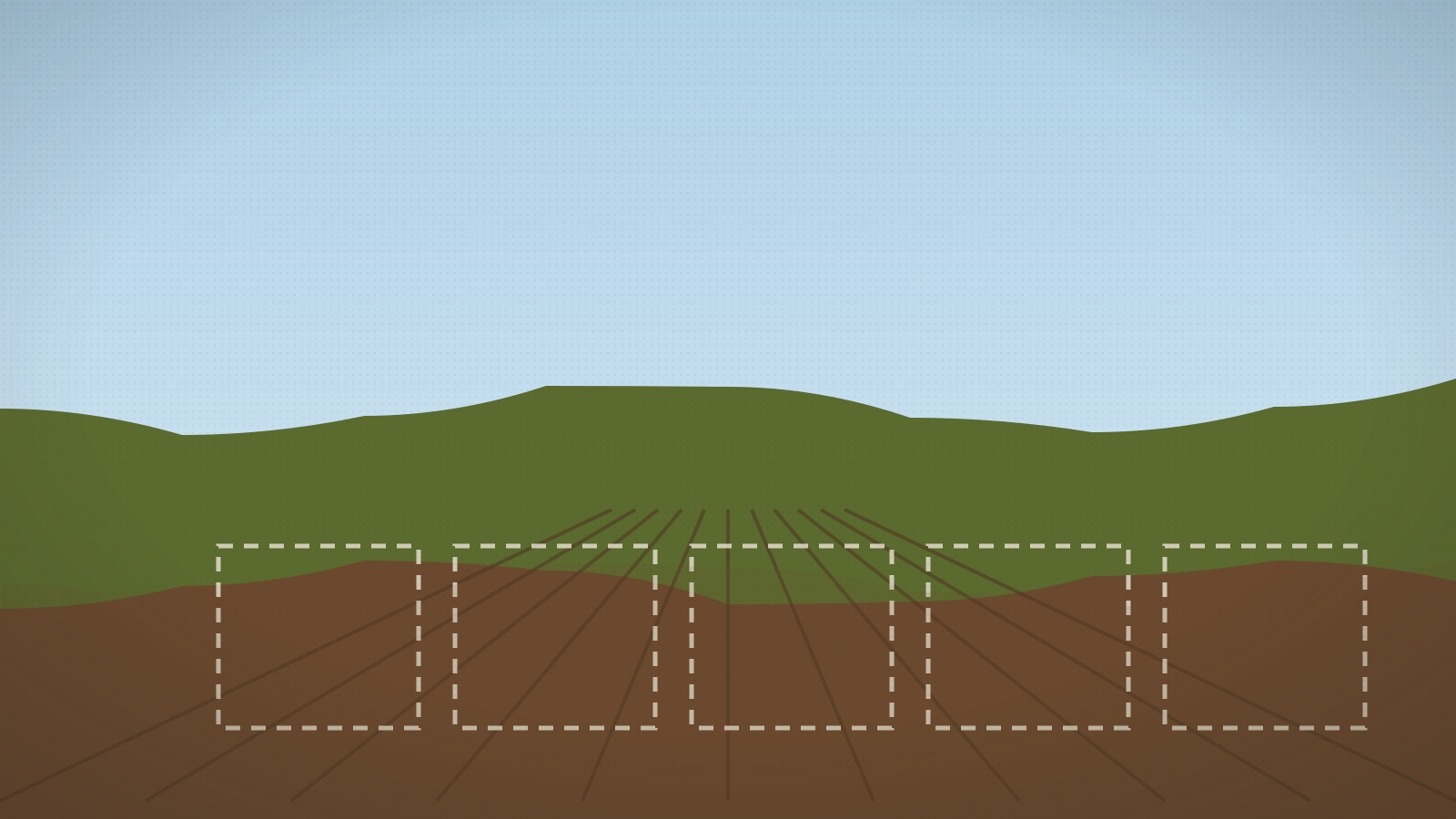
The grid, with the markers on it.
And the nineteen patches that are still free.