



The Farm Shop.
It started because forty tonnes of potatoes had no buyer. There is now a queue outside it most weekends, and everything in it that the planning condition covers has to come from within sixteen miles.
- At
- 0.2 miles
- Rule
- 16-mile sourcing
- Payment
- Card only
What is here.
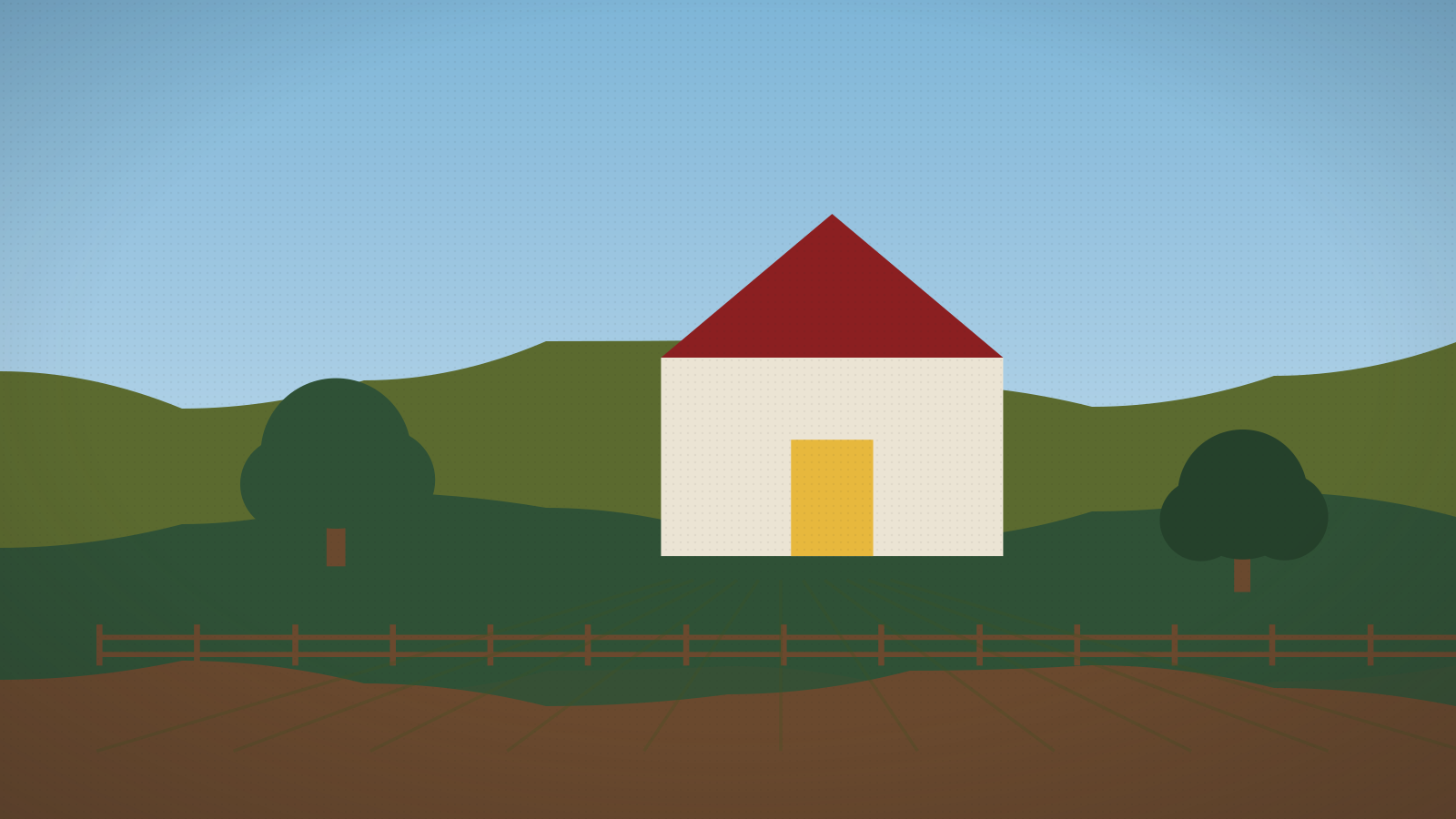
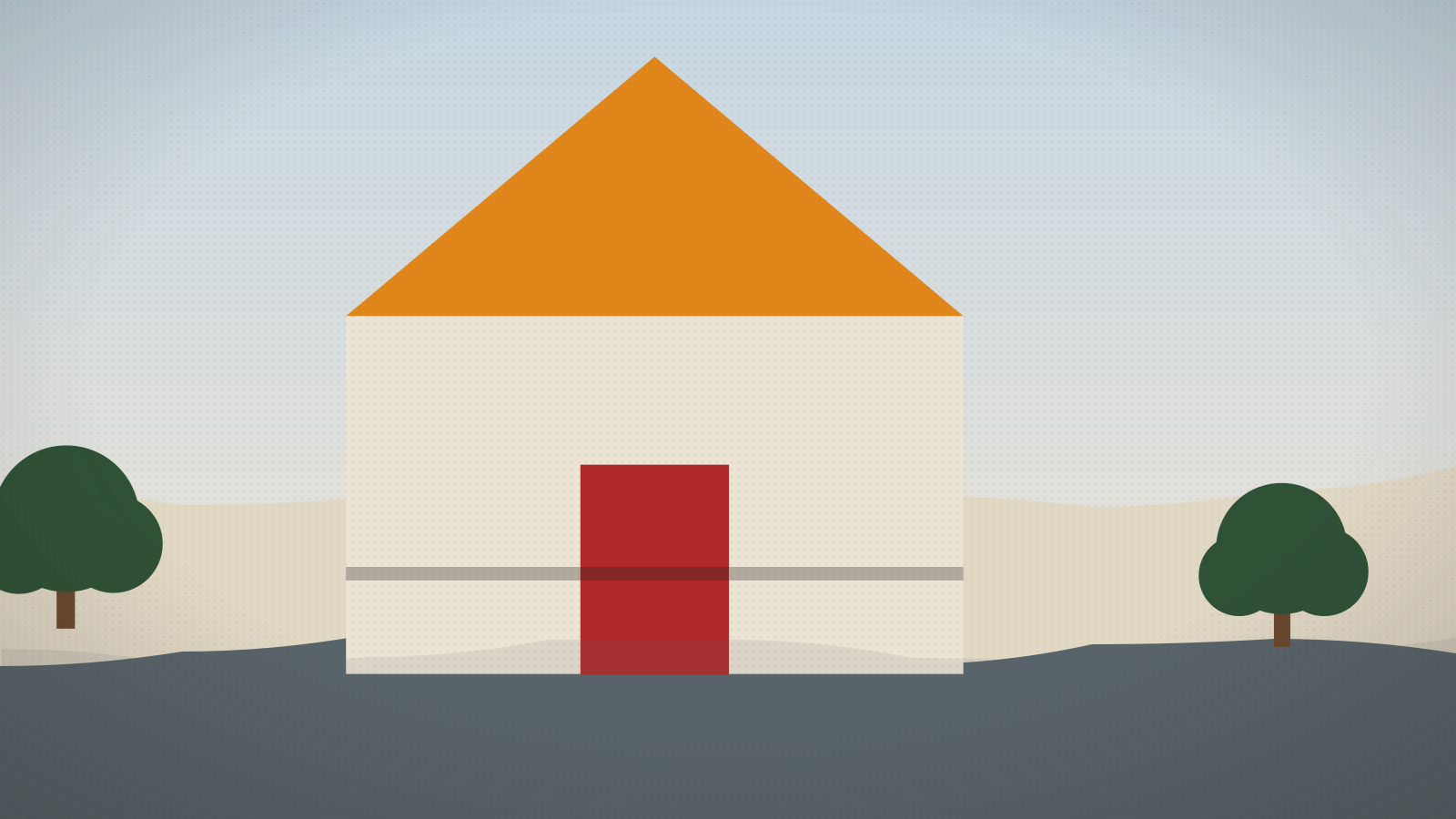
The building is a shed. It has been improved, extended and repeatedly argued about, but it is a shed, and that is the correct amount of building for what it does.
The sixteen-mile rule is the interesting part. Goods sold here are limited to those produced, grown or reared on Diddly Squat or within sixteen miles of it. That is a West Oxfordshire District Council planning condition, not a marketing line, and it is why there is no lemon in anything and why some obvious products simply do not exist.
It is card only. That is not a fashion. It is a queue-management decision made after counting how long a cash transaction takes when the person in front of you is buying one candle and asking where Kaleb is.
What happened here.
Forty tonnes of potatoes were grown with no obvious buyer. A shed was opened to sell them. That shed is the reason there is a brewery, a pub, a television programme with five series, and this website.
It is the clearest illustration of the whole estate’s economics. Barley leaves a farm at a hundred and fifty to two hundred pounds a tonne; brewed, it is worth twenty to forty times that. Potatoes with nowhere to go became a retail business. The farming is the raw material and the margin is always downstream.
The farming itself made a profit of £144 in its first year. The shed did rather better.
- At
- 0.2 miles
- Rule
- 16-mile sourcing
- Payment
- Card only
What it costs to keep.
The Farm Shop
- The original stock
- ~40 tonnes of potatoesAnd no buyer for any of it.
- Sourcing radius
- 16 milesA planning condition, treated as binding.
- Payment
- Card onlyA queue decision, made with a stopwatch.
- Busiest month
- AugustWhich is also harvest, which is unhelpful.
Costs are indicative ranges for work of this kind in this part of the country, not invoices. Where a figure is a published estate number rather than a general one, it says so in the row.
What to look at, while you are here.
The shelf edges
Every label names the maker and the distance. That is the condition, made visible.
Bee Juice
Normal farms sell honey. £12.20, and twenty-seven reviews.
The empty crate
There is nearly always one. Four of the five soft toys are permanently out of stock.
No cash
Not a policy about money. A policy about the length of the queue.
The Farm Shop, in the season it looks best. It does not look like this in February, and the walk changes plates when the real season at OX7 does.
Further along.
The Gate
A five-bar gate, a cattle grid and a sign that has been photographed more times than most listed buildings. This…
The Yard
The turning circle between the grain store, the workshop and the back of the shop. It is where the farm…

The Big Field
From the top of the rise you can see the entire field at once, which means you can see the…
The Dry Stone Wall
No mortar, no foundation to speak of, and it will outlive everybody involved in building it. Around a hundred and…
Watch this bit live instead.
There is a camera on or near this stop, running all year, with no audio and no zoom.