


The Brewery.
The walk cheats here. The brewery is not on this farm and never has been. We have stitched it on to the end because it is where the barley goes, and because leaving it out would leave out the entire point.
- At
- 3.1 miles
- Not on the farm
- And we say so
- Multiple
- 20–40× as beer
What is here.
Barley grown on this ground leaves the farm at a hundred and fifty to two hundred pounds a tonne. The same barley, brewed, is worth twenty to forty times that. Hawkstone turned over £21.3 million in the year to March 2025. The farming, in its first year, made £144.
That comparison is the whole economic argument of this estate in two numbers, and it is not unusual — it is the only model that works for almost any British farm under two thousand acres. The margin is downstream, and the only way to capture it is to own the downstream.
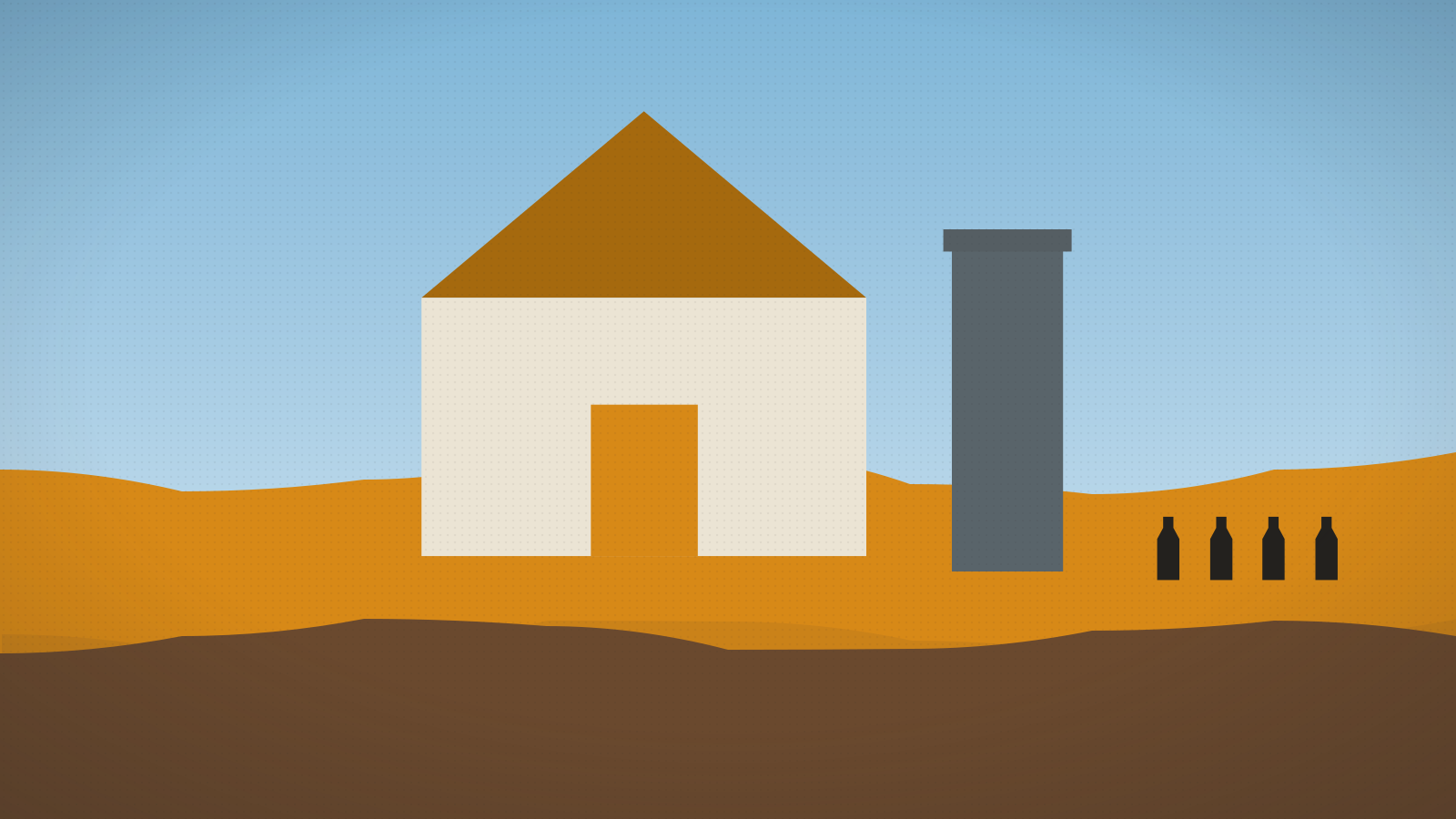
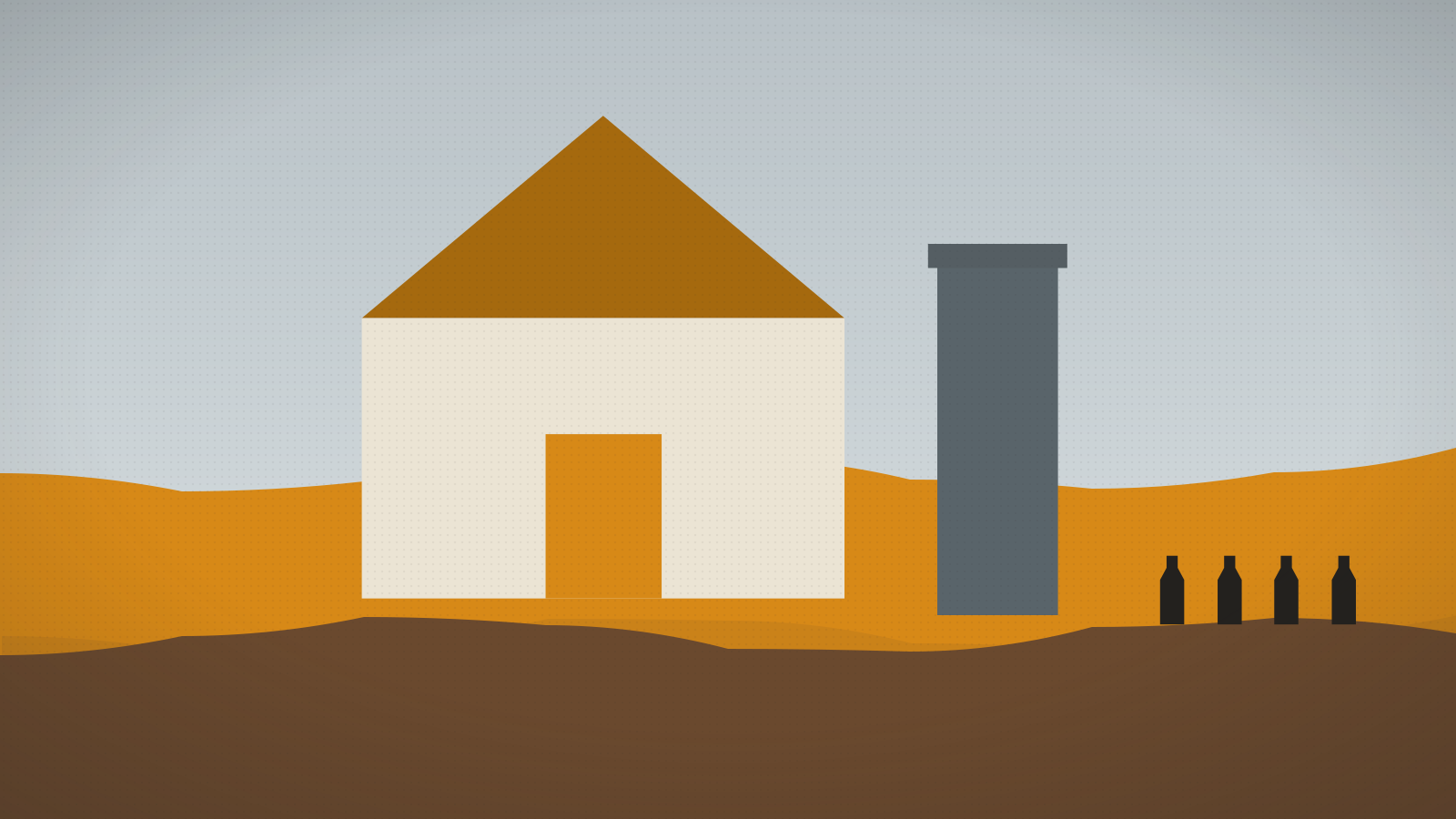
What you are looking at is a mash tun, two coppers and a row of lagering tanks that will hold a beer for four to six weeks while nothing visible happens to it. Lagering properly is mostly waiting, which is why it is expensive and why so few people do it.
What happened here.
Hawkstone started as a way of doing something with barley other than selling it. It is now the largest single business in this account and the clearest proof that the farming is the raw material rather than the product.
The honest caveat, which the brewery page makes too: the lager and the pils are brewed with barley from this farm. The cider is British apples, never concentrate. The spirits use British grain but not exclusively our own, and each page says which is which.
- At
- 3.1 miles
- Not on the farm
- And we say so
- Multiple
- 20–40× as beer
What it costs to keep.
The Brewery
- Barley, out of the gate
- £150–£200 a tonneThe commodity price, before anything is done to it.
- The same barley, as beer
- 20 to 40 times thatWhich is the whole argument.
- Hawkstone, year to March 2025
- £21.3 millionTurnover, as reported.
- Lagering time
- Four to six weeksIn a tank that could be turning over a faster beer.
Costs are indicative ranges for work of this kind in this part of the country, not invoices. Where a figure is a published estate number rather than a general one, it says so in the row.
What to look at, while you are here.
The mash tun
Where the grain gives up its sugar, over about an hour and a half.
The copper
The boil, and a hop addition that lasts four seconds.
The lagering tanks
Four to six weeks of nothing happening, expensively.
The floor camera
Six metres up on the roof steel, live on brew days.
The Brewery, in the season it looks best. It does not look like this in February, and the walk changes plates when the real season at OX7 does.
Further along.
The Lambing Shed
Four pens, a creep, a heat lamp and a camera. For six weeks in spring it is the most watched…
The Pub
The Farmer’s Dog, which is five miles down the road and not on this walk in any honest geographical sense.…
The Gate
A five-bar gate, a cattle grid and a sign that has been photographed more times than most listed buildings. This…
The Farm Shop
It started because forty tonnes of potatoes had no buyer. There is now a queue outside it most weekends, and…
Watch this bit live instead.
There is a camera on or near this stop, running all year, with no audio and no zoom.