


Lisa.
The farm shop, and the multiplier that makes the whole economy work. Raw produce sold at the gate is worth one thing. The same produce converted and sold through the shop is worth three to eight times that, and learning why is the point of the stage.
- Converts
- Raw produce into shop lines
- In-game multiplier
- 3–8×
- Real multiplier
- 20–40×, barley to beer
The mechanic, in full.
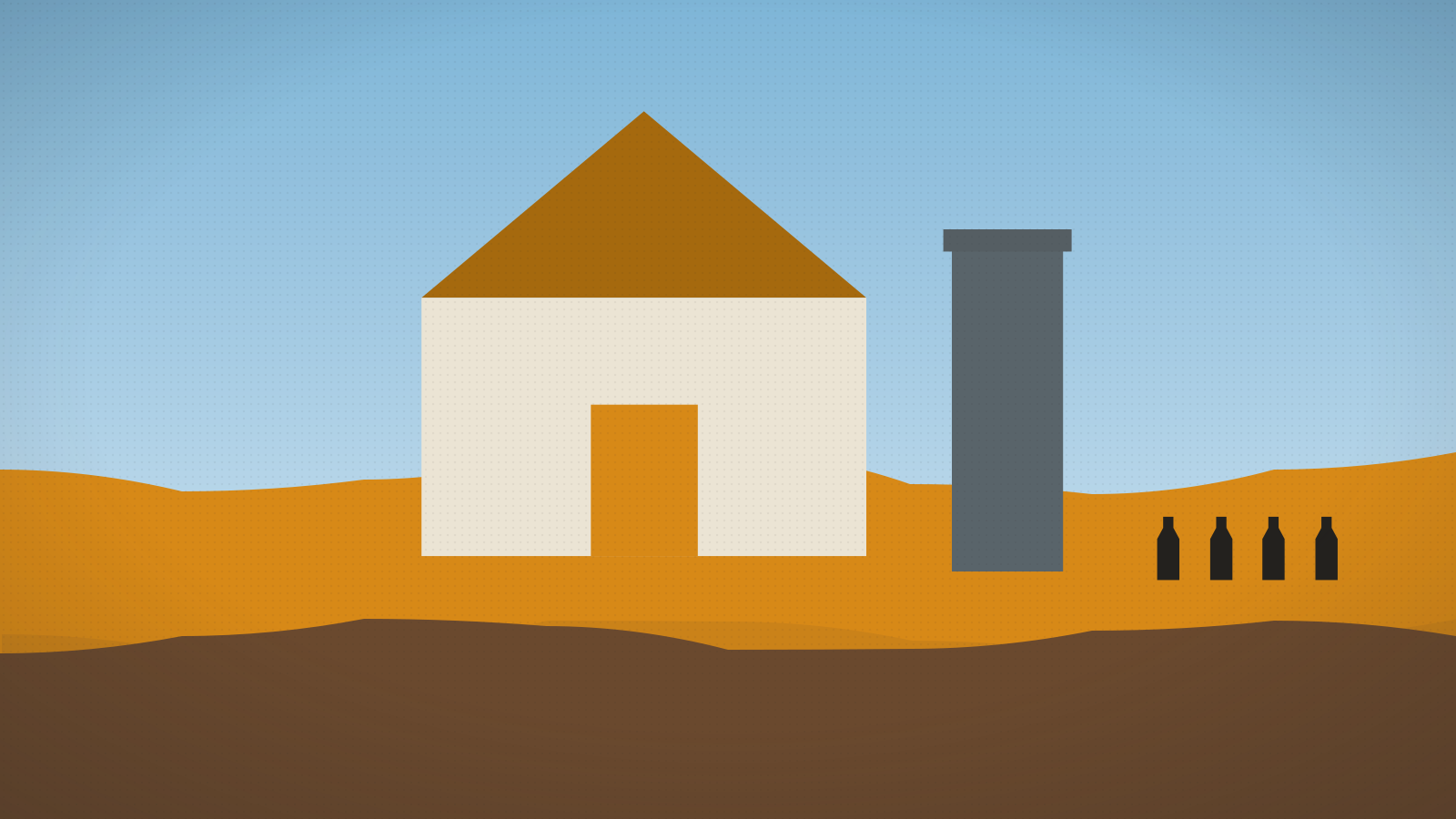
Feed barley leaves a real farm at somewhere around a hundred and fifty to two hundred pounds a tonne. The same barley malted, brewed and sold as beer is worth twenty to forty times that. This is the single most important fact about British agriculture and almost nobody who has not farmed knows it.
The game teaches it by making it a stage. Potatoes sold at the gate return a small, certain sum. Potatoes washed, bagged and sold through the shop return more. Potatoes turned into crisps return more again, and cost a building, a process and a queue. The multiplier is compressed to three to eight times rather than twenty to forty, because a faithful multiple would make every other stage of the loop pointless within an hour.
The constraint is the interesting half. The shop has a capacity, the capacity is upgradeable, and the sourcing rule means you can only sell what came from your own ground or from a neighbour inside the radius. That is a planning condition on a real farm shop, and in the game it is the thing that stops retail eating the farm.
The numbers.
Lisa, specified
- Converts
- Raw produce into shop lines
- In-game multiplier
- 3–8×
- Real multiplier
- 20–40×, barley to beer
- Constraint
- Shop capacity and the sixteen-mile rule
The rules that apply to every character
- Can this system be bought outright?
- NoNothing in the design converts money into a better outcome. Money buys time and cosmetics.
- Can it punish an absent player?
- NoRelief cover covers up to 21 days, free, and nothing decays behind it.
- Is the person licensed?
- NoThis is an unsolicited design document. No agreement exists with anybody named on it.
Role in the game
Turning produce into products
Where it sits in the loop
Named on the loop page, stage by stage.
Purchasable?
No part of this system is for sale.
On the estate
A real person, described here without permission.
The other five.
Kaleb
Pay Kaleb and the job that was going to take four hours takes none. He is the game’s only time-skip, he is the…
Charlie
The agronomist and land agent, and the only character whose entire function is to tell you that you cannot do …
Gerald
The boundaries. Dry-stone walls by the metre, hedgerows laid rather than flailed, and a biodiversity score tha…
Alan
The builder. Everything built in the game goes through Alan, every quote he gives is honest, and every final i…
Harriet
Set relief cover before you close the game and the farm carries on without you. Stock is fed, windows that mus…
Lisa, questioned.
It is a mechanic named after what they visibly do on screen, compressed into something a game can model. It is not a portrait and it is not endorsed by them.
No. The only things money buys anywhere in this design are Kaleb’s time-skips and cosmetics, and neither of those changes an outcome.
The whole loop this sits inside.
Six stages, and the third one is the interesting one.
Get told before everyone else
One email a fortnight about what is actually happening in the fields, the brewery and the pub — including the bits that went wrong.