



Free, no sign-up, and it works on a whiteboard.
Every camera here is free to any school, at any time, with no account and no login screen in the way of a class that has four minutes left before break.
What a school actually needs, which is not what a platform usually builds.
A teacher has a class in front of them and a projector that took two minutes to wake up. What they need is a URL that opens straight onto a picture, without a cookie banner, an age gate, a newsletter overlay or a login.
So the camera pages carry none of those when they are opened from a school link. No sign-up, no membership check, no interstitial. The picture is the first thing on the screen.
The second thing they need is for it to be reliable on a Tuesday at half past ten. That is why the fallback still exists and why the offline page names a specific camera rather than saying something vague about technical difficulties. A stamped still from eleven minutes ago is a perfectly good lesson. A spinner is not.
Using it in a lesson.
Open the camera page directly
Every camera has a plain URL. Bookmark it, put it in the scheme of work, and it will still be there next term.
Use the hedgerow for a seasons unit
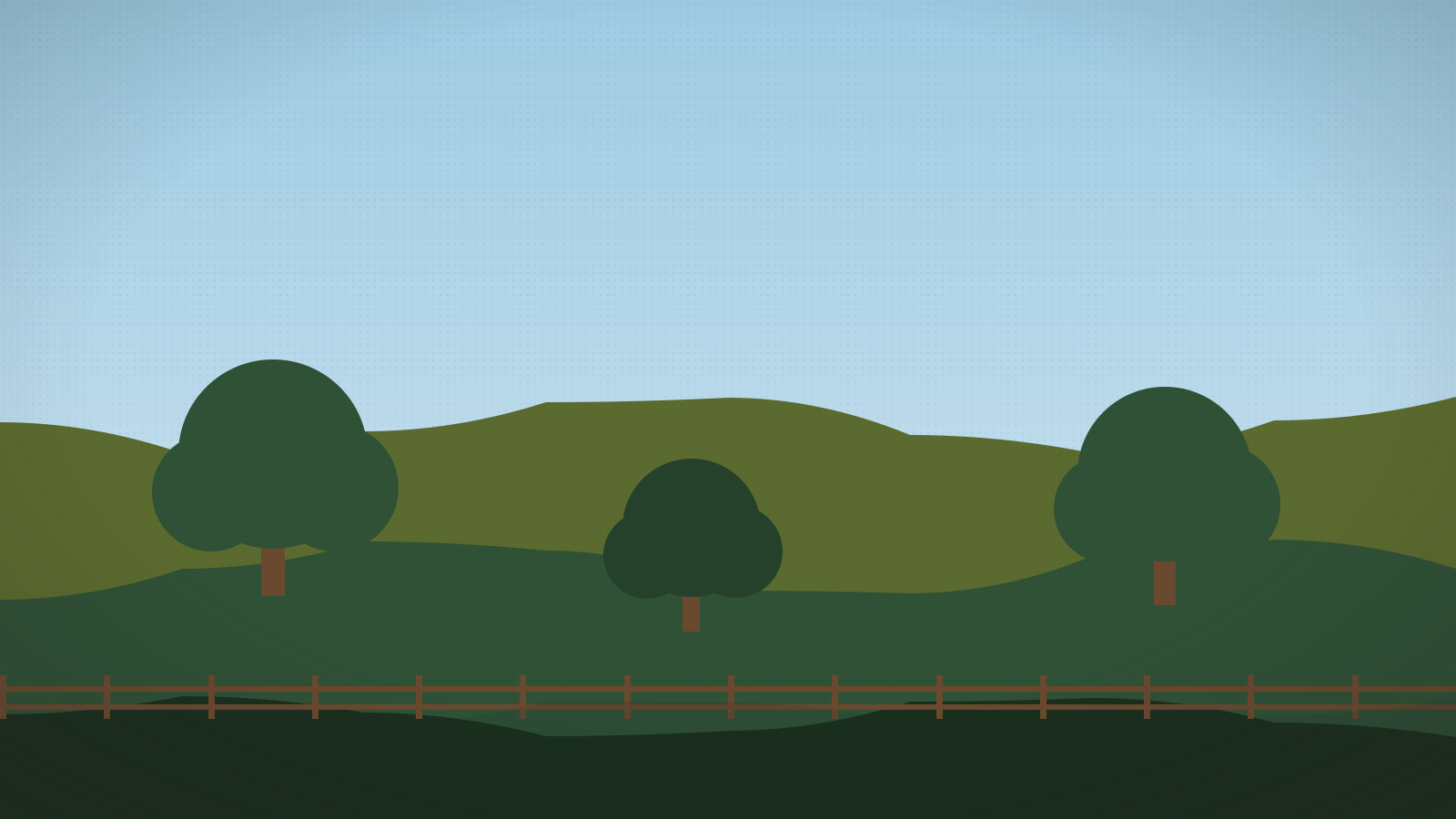
One camera, one hedge, four visits across a year. The change is slow enough that children can genuinely measure it.
Use the lambing shed in March
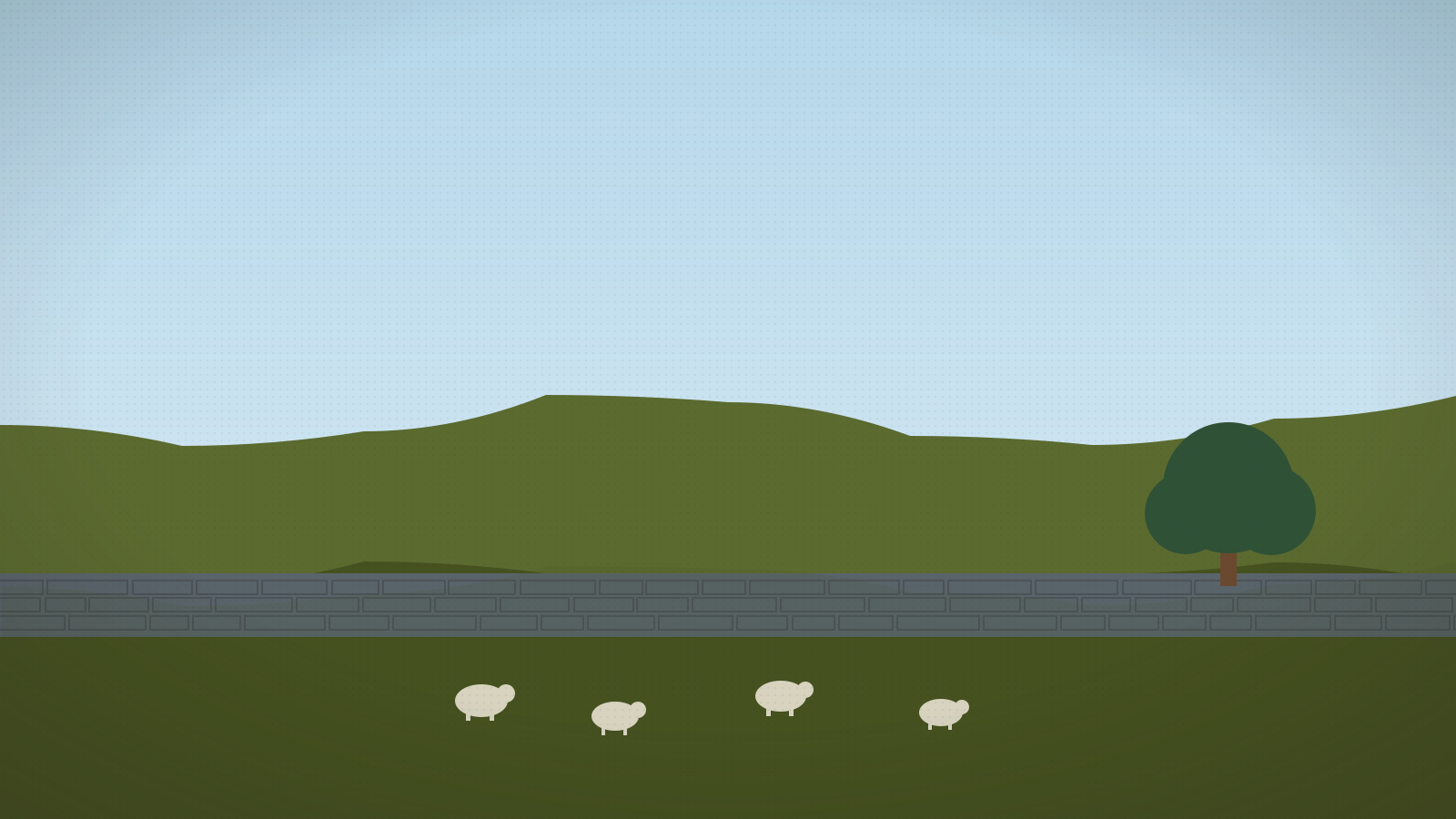
Free to everybody, live all night, and the single most engaging thing on this website for a Key Stage 1 class.
Use the weighbridge for a numbers lesson
Loads, weights, and a real harvest total that did not come out the way anybody planned. Arithmetic with a consequence attached.
Ask for the still if the feed is down
The offline page names the camera and the reason. Use the stamped still and talk about why farms lose power in December.
Which camera suits which lesson.
| Camera | Age range | What it is genuinely good for |
|---|---|---|
| The lambing shed | 4–11 | Life cycles, and the fact that it happens at two in the morning |
| The hedgerow | 5–14 | Seasons, habitat, and slow measured change across a year |
| The beehive | 7–14 | Pollination, colony behaviour, and counting things that move |
| The big field | 9–16 | Weather, soil and why the top of a field fails before the bottom |
| The weighbridge | 11–16 | Real numbers, real yields, and a year that did not go to plan |
| The brewery floor | 14+ | Process, food science, and adding value to a raw material |
What a school gets, and what it never sees.
Included
- Every camera, free, forever
- No account, no login, no age gate on a camera page
- A plain URL that will not change
- A stamped still when a feed is down, with the reason
- A named person to email when something breaks in lesson time
Never
- Any advertising on a school route
- Any data collection about pupils
- A sign-up wall in front of a picture
- A cookie banner you have to dismiss to see a hedge
The four we would start with.
A life cycle, a season, a pollinator and a number that did not go to plan.

The rest of the schools programme.
Visits, resources and the field guide, all of which are free to state schools.
What people actually ask.
The two questions this page gets most, answered without a support ticket.
Public filings, published rankings and press reporting, each labelled on the page as a verified record, a founder claim or a third-party estimate.
The words are ours. The brands are not, and nothing here is licensed.